




Soil, Dust, Fright, Beat
Four conversations that address the traces that coloniality has left in ecosystems.
The first national retrospective by Kapwani Kiwanga, winner of the 2025 Joan Miró Prize, opened on 29 April, supported by the Stavros Niarchos Foundation (SNF) and CUPRA. Kiwanga creates a compelling internal architecture that explores the materiality, economic exchanges and geological temporealities that shape our relationship with spaces.
Conceived specifically for the Fundació Joan Miró, the show fully reflected her explorations on space and control, offering new perspectives for viewing architecture and its power structures from a radically contemporary standpoint.
Kiwanga's work displays an internal structure of exceptional precision and coherence. Her artistic practice organically engages with architecture, as she explores the materiality, resource flows, exchange economies and the power structures that organise territories and bodies. Having conducted research into architectural structures and material circulation systems, in recent years she has broadened this paradigm towards transhuman temporalities, such as geology, thereby enabling an understanding of spaces and systems from scales that go beyond human time.
An anthropologist by training and an artist with an international career, Kiwanga has created a body of work that uses formally refined installations to deconstruct hegemonic narratives and examine the relationships between power, architecture, territory and bodies. The Joan Miró Prize jury recognised her ability to transform complex historical and social processes into poetic and conceptually rigorous forms that are capable of establishing a profound dialogue with Miró's radicalism and Sert's architecture.
The exhibition brings together a selection of already created works and a significant proportion of new pieces that the artist has produced specifically for the Barcelona show. It explores these themes and focus on three key areas: materiality, economic and cultural exchanges and their structural tensions, as well as contemporary crises related to territory, ranging from farming to housing. All these aspects connect directly with the architectural reading that runs through this year's programme, positioning Kiwanga's work as a space from which to reconsider how the world we inhabit is constructed.
An exhibition in collaboration with TBA21 Thyssen-Bornemisza Art Contemporary.


Lead Supporters:

Exhibition collaborator:
Four conversations that address the traces that coloniality has left in ecosystems.

A dialogue between River Claure's photos and Mafe Moscoso's poems

Conversation between the artist Kapwani Kiwanga and the geographer and academic Kathryn Yusoff
 about "Revolutions Are Geological, Not Just Political Acts of Defiance"
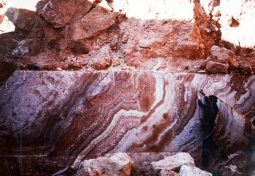
Samia Henni, Lydia Ourahmane and Khaled Bouzidi invited by the Dust Pavilion research group, comprising Llorenç Bonet, Olga Subirós and Joana Teixidor. An afternoon of conversations and performance between the Fundació Joan Miró and the Mies van der Rohe Pavilion.
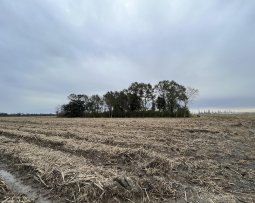
Presentation of the artistic practice of Imani Jaquelie Brown in conversation with architect, author, and educator Paulo Tavares.
about "Forest Islands of our ecological diaspora: Imani Jaqueline Brown and Paulo Tavares"
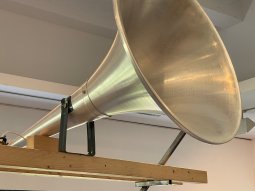
Mediation space curated by Maguette Dieng.
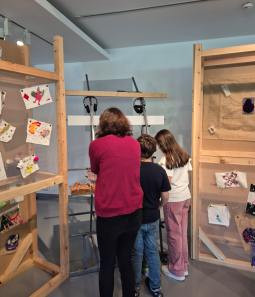
Welcome space for school groups with mediation by Tau Luna and edu r. pineda
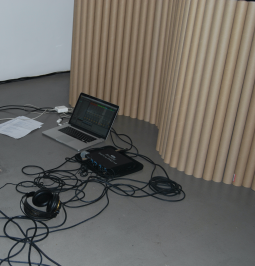
Sound action by Laura Llaneli.
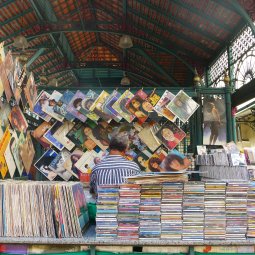
Listening session by Natalia Figueredo.

Educational project with Escola Pau Sans by Maguette Dieng, with mediation by Tau Luna and edu r. pineda
